CHSP Alumni Spotlight: Akaash Jhinkoe & Amos Constant
Suriname, Maastricht University, MA Arts and Heritage: Policy Management and Education
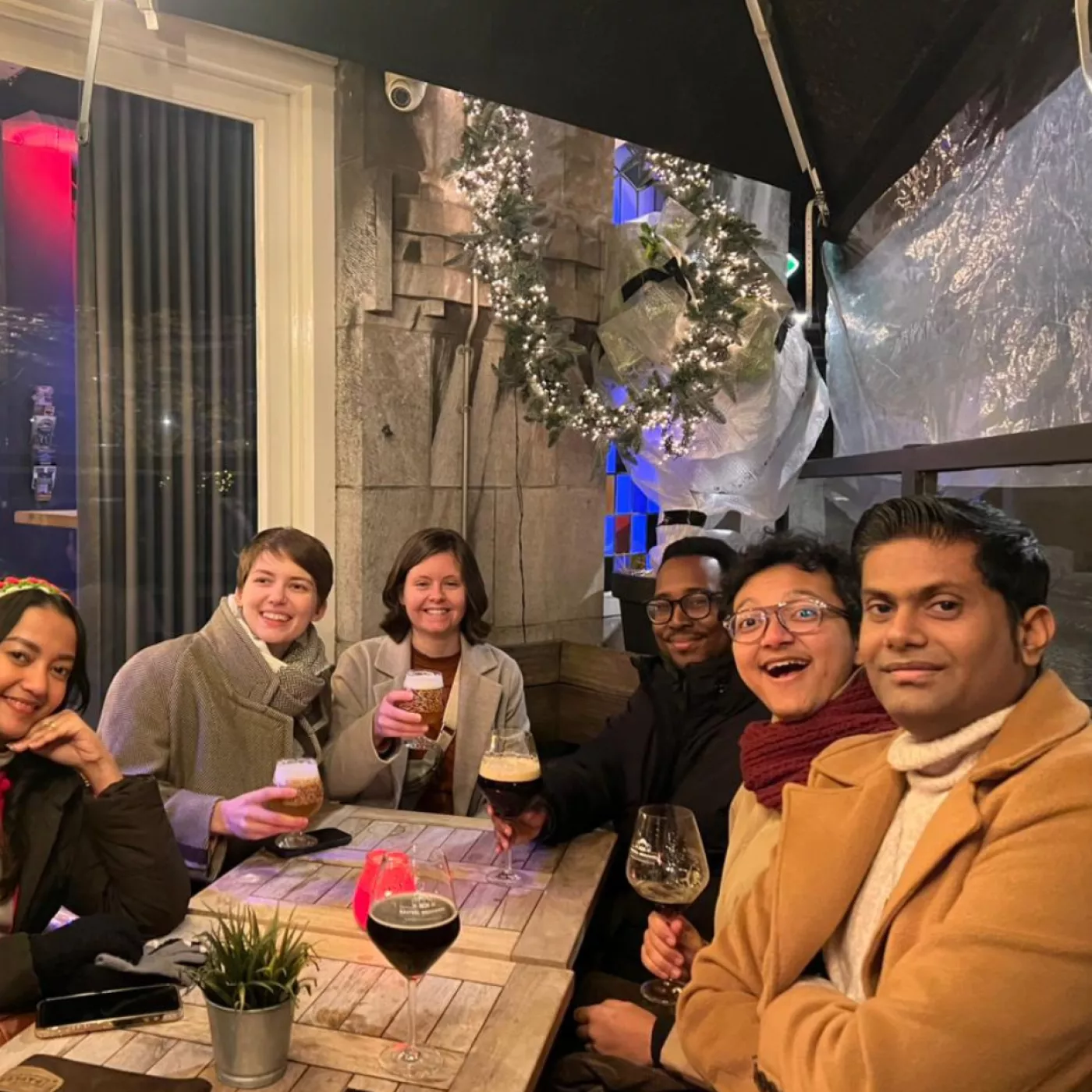
Amos and Akaash are two of the Cultural Heritage Scholarship Programme (CHSP) alumni who completed their Master's in Arts and Heritage: Policy, Management and Education at Maastricht University. What makes their story particularly striking is where both of them ended up: working side by side at the National Archives of Suriname, applying what they learnt in the Netherlands directly to one of their countries' most important cultural institutions.
Amos currently works as a Researcher at the National Archives, where his work focuses on colonial history, slavery, and the experiences of enslaved and indentured communities in Suriname. His research involves uncovering voices and perspectives that have historically been marginalised or silenced within colonial documentation, and he is actively involved in public history initiatives, including articles, exhibitions, and discussions, that aim to make archival history more accessible to wider audiences. Akaash, meanwhile, serves as Head of Education and Outreach at the same institution, developing interactive programmes for students, creating educational materials, and leading curatorial and exhibition work in collaboration with national and international partners.
Though their roles differ, Amos and Akaash share a common thread: the CHSP programme reshaped how both of them think about archives, heritage, and their responsibilities within it. For Amos, it provided the space to engage critically with questions surrounding colonial collections, restitution, and community involvement: themes that sit at the heart of his current research. His master's thesis at Maastricht focused specifically on community involvement in decision-making processes surrounding the restitution of colonial collections, a subject that continues to shape how he approaches his work. For Akaash, the programme deepened his understanding of cultural policy, museum practice, and the social role of heritage institutions. Courses on decolonising heritage and memory pushed him to question dominant systems of knowledge and to think more carefully about whose voices are represented in archives, and whose are missing
That shift in perspective has had tangible consequences for both of them. Last year, Amos and Akaash were both involved in a major exhibition marking 50 years of Suriname's independence, an undertaking that called on everything the programme had given them. Akaash approached the exhibition by consciously reading between the lines of archival sources, surfacing histories of slavery, colonialism, and contract labour that are often absent from official narratives. Amos contributed through the lens of community engagement, a principle he now sees as inseparable from responsible archival work. This year, that commitment to accessibility has continued: both have been visiting districts across Suriname, engaging with students and helping younger generations connect with their own history and cultural heritage.
Beyond the independence exhibition, Akaash has developed a project focused on elderly people in care homes; a group whose lived experiences and memories are rarely captured in public narratives. By applying the critical frameworks he encountered during the CHSP programme, he has worked to make their stories visible and to reflect on how memory, experience, and identity are shaped and represented over time.
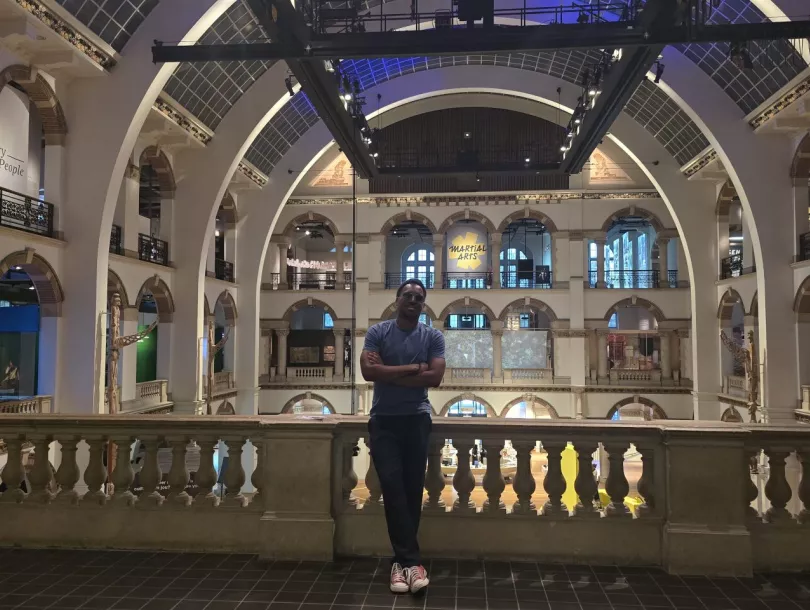
Both Amos and Akaash are clear-eyed about the broader landscape. While they see CHSP as having had a significant impact on heritage and archival work in Suriname, building professional capacity, introducing new methodologies, and strengthening critical conversations about colonial history and identity, they are equally candid about what remains.
For a country where colonial history is still very much part of everyday life and identity, the work of archives and heritage institutions matters deeply. Greater governmental recognition, both argue, is essential to ensuring that significance is matched by sustained support.
For Amos and Akaash, the CHSP was not simply a degree abroad. It was an encounter with new ways of thinking about the past, and a deepened sense of responsibility for how that past is told, preserved, and made alive for the people of Suriname.
Cultural Heritage Scholarship Programme
The Cultural Heritage Scholarship Programme (CHSP) is a Nuffic initiative funded by the Dutch Ministry of Foreign Affairs, designed to empower young professionals from Indonesia, Nigeria, Sri Lanka, Suriname, and South Africa to pursue a specialised master's programme in cultural heritage management in the Netherlands. The programme aims to foster international collaboration and knowledge exchange, enabling alumni to bring new expertise and perspectives back to their home communities.