Report International Competencies
What can pupils and students learn from an international or intercultural experience? International experiences can help pupils and students develop knowledge, attitudes and skills they need to learn, live and work in both today’s and tomorrow’s society and labour market. But what exactly can they learn, and under what conditions? We reviewed recent research and updated Nuffic’s International Competencies Model from 2019.
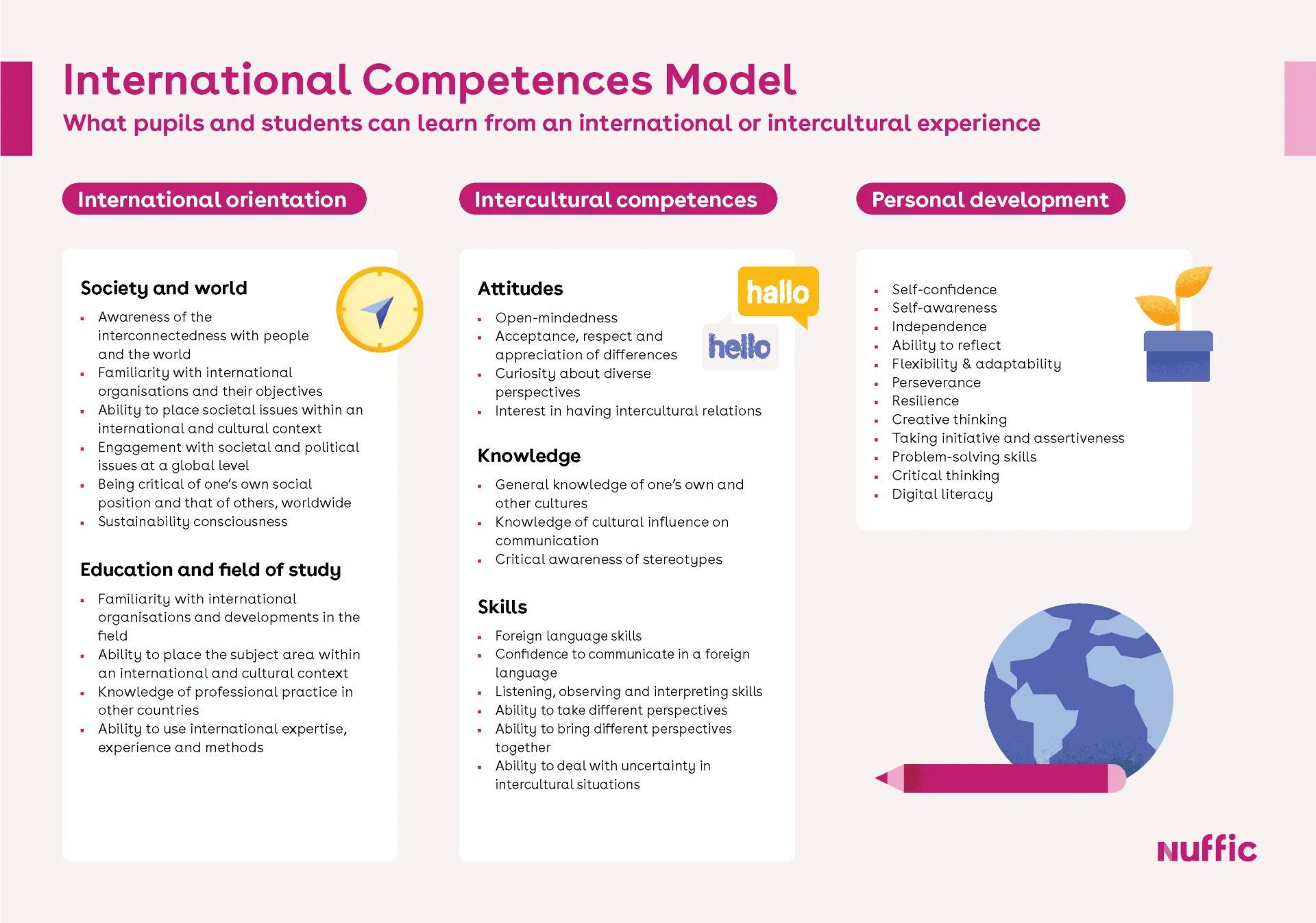
Three types of international learning outcomes
The updated model groups learning outcomes into three areas. International orientation is about understanding and engaging with international issues, perspectives and developments regarding society/world and education/field of study. Intercultural competencies help people interact with those from diverse linguistic and cultural backgrounds. Personal development includes broader skills that are useful in international settings, but also beyond them.
What have we learned since 2019?
There is now much more research on what pupils and students actually learn from experiences such as studying or doing a work placement abroad, virtual exchange and COIL, and Internationalisation at Home. Based on this evidence, we have updated and further defined the competencies in the model.
An international experience is not enough on its own
One important finding, in addition to the model itself, is that learning does not happen automatically simply because someone goes abroad or takes part in an intercultural activity. Reflection and guidance matter. The way an activity is designed, opportunities for meaningful interaction, and students’ own starting points (such as cultural background, existing attitudes and previous experience with internationalisation) can all influence what they learn.
And now?
Education professionals can use the model to set learning goals, design international and intercultural activities and help pupils and students reflect on what they have learned. The model can be used in primary and secondary education, VET and higher education.
Download the model and the full descriptive report to explore all the competencies and the research behind them, as well as what has changed since 2019 and the factors that influence how international competencies develop. The list of definitions can also be downloaded separately.