Skills Validation for International Learning Experiences
Sometimes you need a better understanding of someone’s foreign learning experiences than a standard credential evaluation can provide. That’s why we offer trajectories for comprehensive credential evaluation and skills validation. In doing so, we not only evaluate how a foreign study program compares to a Dutch program, but we also provide a detailed overview of a credential holder’s skills.
What does this service include?
- A better understanding of the skills acquired during a foreign study programme;
- A clearer picture of any additional training or education needed to perform a specific job;
- A better understanding of the broader employability and development opportunities for international employees.
We offer customized trajectories for a wide range of target groups, educational backgrounds from other countries, and industries. This ensures that the outcomes are as closely aligned as possible with real-world practice and the organization’s information needs.
There are several options:
- A comprehensive evaluation of the degree, including a description of the learning outcomes and/or skills acquired during the formal study programme;
- In addition, we can also identify skills developed outside formal education, such as through training courses, professional education, or work experience. Soft skills (transversal skills) can also be included in this assessment.
Example of Practice
For the initiative “Beyond the Barriers, Belonging in The Hague’s Healthcare Sector,” Nuffic has published comprehensive credential evaluations for healthcare personnel with foreign qualifications. Currently, candidates’ soft skills are also being assessed through group sessions and assessments, among other methods. Candidates are then matched by the Municipality of The Hague with employers in the healthcare sector. The comprehensive evaluations support the hiring process and the onboarding of selected candidates (Haaglanden Learning Coalition, 2026).
> See also: Skills recognition project helps to plug health sector gaps.
Explanation of the Skills Validation Methodology
Methodology for Comprehensive Diploma Evaluation:
- Mapping the learning outcomes of a formal foreign educational program to ESCO skills (a European classification system for skills);
- If available, certificates obtained outside the formal education system may also be taken into account.
Comprehensive qualification assessment + transversal skills (soft skills or workplace skills):
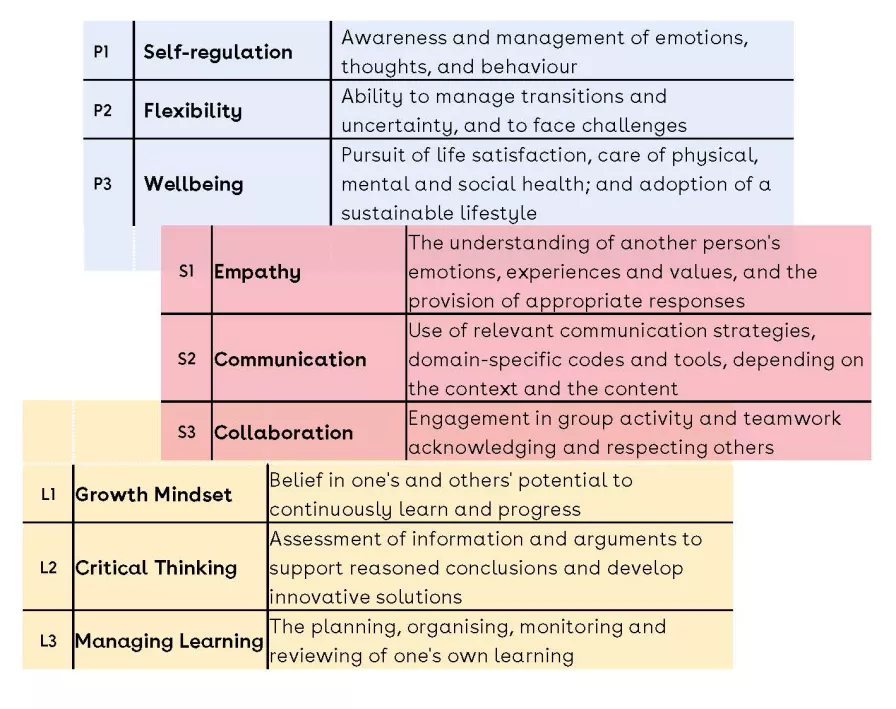
The LifeCompetency Framework serves as the basis for incorporating transversal skills acquired outside of formal education. This framework includes nine competencies identified by the European Commission as key competencies for the 21st century. Depending on the sector in which the candidate wishes to work, additional competency frameworks may be used to validate skills.
- Addition of group sessions: dialogues and exercises using competency cards;
- Addition of an online assessment.
- If necessary (for example, when important information is missing), interview techniques can be used based on the European Qualification Passport for Refugees, a project for refugees who lack educational documents, organised by the Council of Europe.
Final product
The final product is a document comparing the foreign study programme with the Dutch study programme, supplemented by the skills of the degree holder as identified by Nuffic.
- Want to find out more about how we support sustainable employment for talented healthcare professionals? Read the full article.
- For more information, please contact Skillsvalidation@nuffic.nl.