EU and ASEAN highlights urgent need to align vocational training with agri-food sector demands
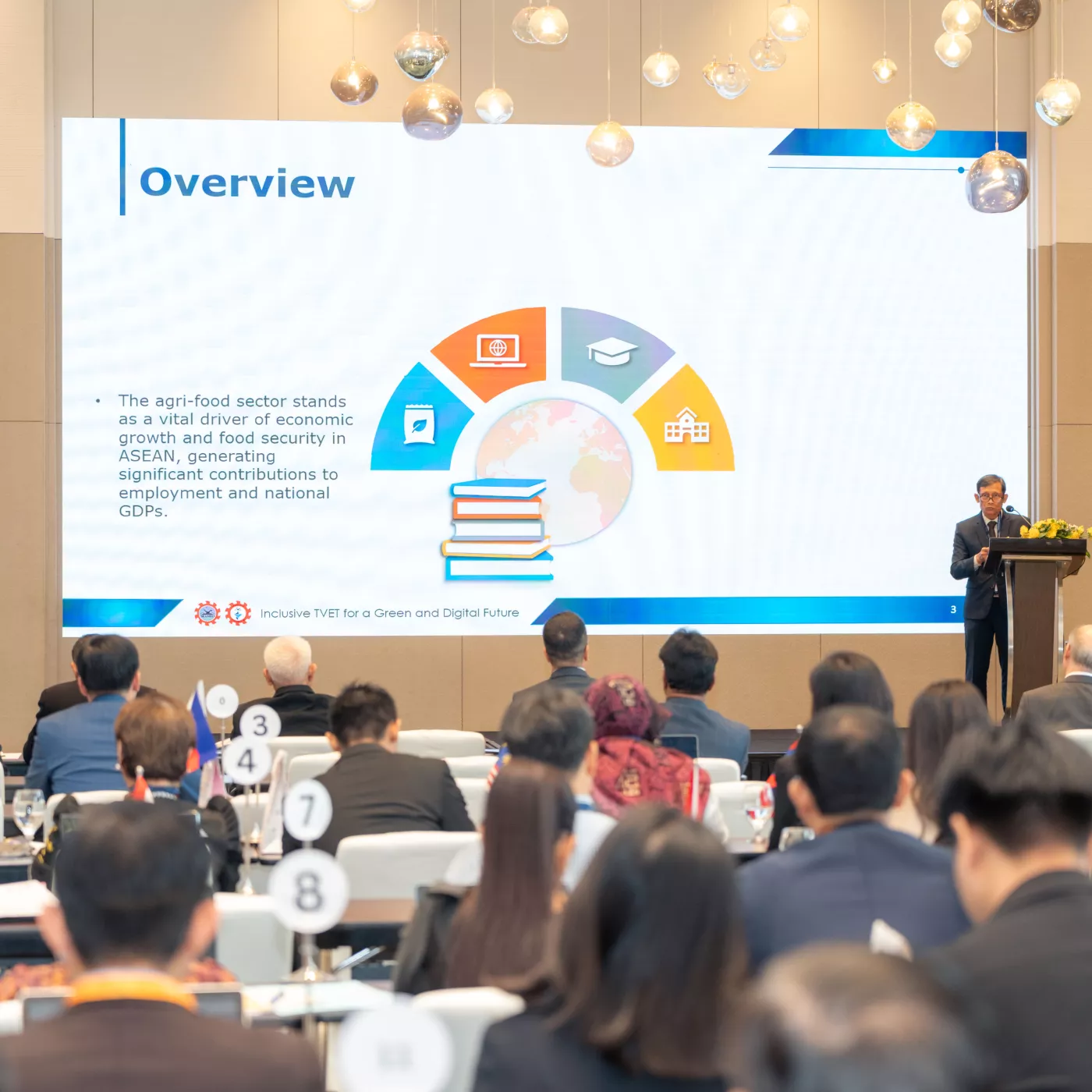
A major regional Study on the Employability of Vocational Graduates in the Agri-Food Sector in ASEAN was officially launched during the opening of the Closing the Gap Workshop 2025, held in Phnom Penh, Cambodia.
Developed under the EU-ASEAN Sustainable Connectivity Package – Higher Education (SCOPE-HE), coordinated by SEAMEO VOCTECH, and funded by the European Union. Conducted by a team of national and regional experts, the study applied a mixed-methods approach—combining desk research, surveys, and stakeholder consultations—providing an up-to-date and comprehensive overview of TVET graduate employability in the agri-food sector.
The findings reveal that while employment rates for TVET graduates are generally high, many face skills mismatches and limited opportunities to adapt to fast-evolving industry needs. Key recommendations include:
- Curricula reform is needed to integrate labour market demands.
- Stronger industry partnerships for practical training opportunities and workplace readiness.
- Investment in teacher training to modernise teaching methods and skill delivery.
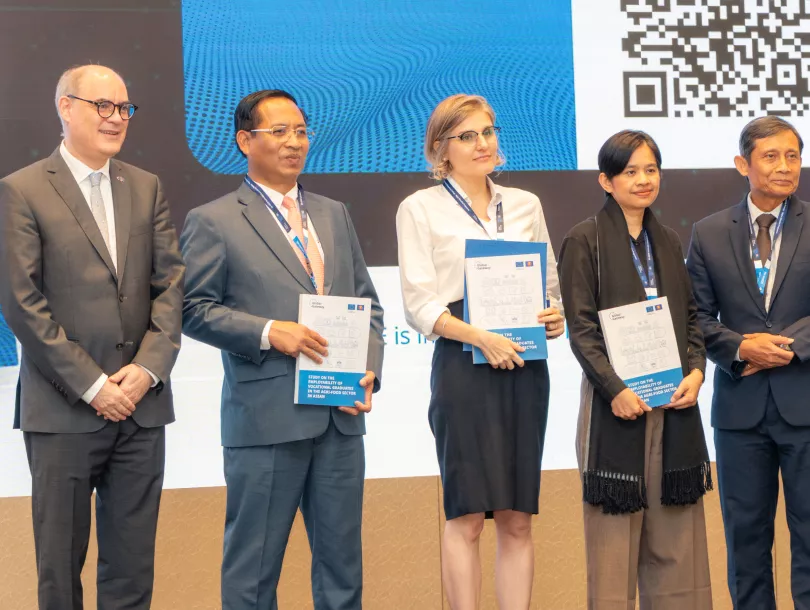
Launch of the Study on the Employability of Vocational Graduates in the Agri-Food Sector in ASEAN. From left to right: Dr Frank Feulner (Team Leader, EU–ASEAN SCOPE-HE Programme), H.E. Hing Sideth (Director General of TVET, Ministry of Labour and Vocational Training, Cambodia), Ms Flora Bertizzolo (Education Attaché, Delegation of the European Union to Cambodia), Ms Amalia M. Serrano (Senior Officer, ASEAN Secretariat), and Dr Paryono (Deputy Director for Professional Affairs and Research, SEAMEO VOCTECH).
In presenting the findings, lead researcher Dr Paryono noted:
“While employment rates for TVET graduates are relatively high, the study finds persistent mismatches between training and real-world needs — particularly in digital and green skills. Strengthening curriculum relevance, industry partnerships, and enhancing the skills and capacity of teachers is vital for future progress.”
Dr Frank Feulner, Team Leader of SCOPE-HE, added:
“This study offers vital evidence for ASEAN Member States and their partners to commit to and enhance vocational training and policy development. The EU, through the SCOPE-HE Programme, is dedicated to work with partners in fostering a future-ready, resilient, and skilled workforce in ASEAN.”
The publication will serve as a key reference for future regional policy dialogues, including the upcoming ASEAN-EU Policy Forum in Kuala Lumpur, Malaysia, and informs the next stages of the Closing the Gap workshop series.
These efforts contribute to ASEAN’s regional integration goals, as outlined in the Master Plan on ASEAN Connectivity 2025 and the ASEAN TVET Council Work Plan 2021–2030.
Other information